Skip to content

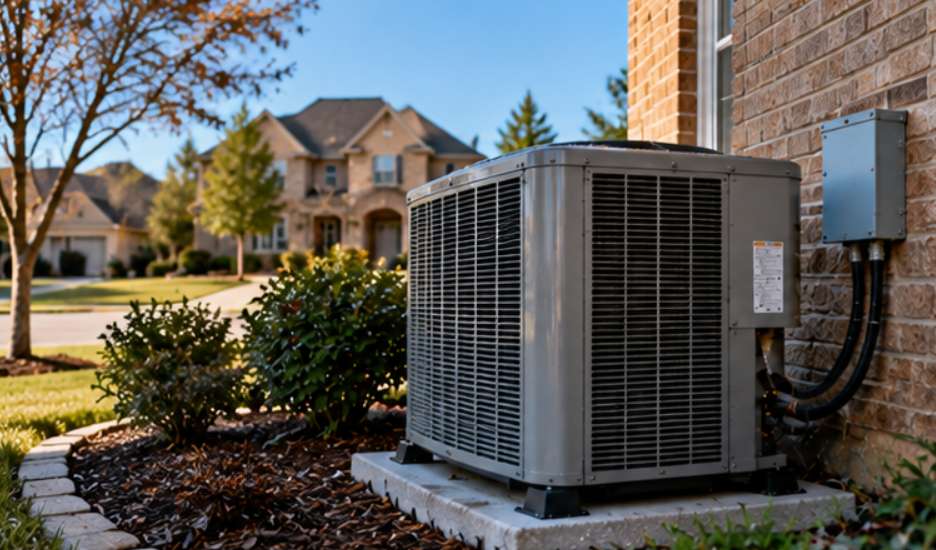
A heat pump that has warmed your house without complaint all through a mild December can still fail on the first hard freeze, and nothing about how it ran in the easy weather would have warned you. The faults that matter most in winter are the ones that stay invisible until the system is finally asked to work hard. This guide covers which ones hide, how to tell them apart, and when a check makes sense.
In a mild North Texas winter a heat pump is rarely pushed, so a weak compressor, a failing defrost cycle, or auxiliary heat kicking in too often can go unnoticed for months. The problems surface during a cold snap, which is the worst time to discover them. Good heat pump maintenance in Southlake means a fall heating-mode inspection, done twice a year alongside spring AC service, that catches these faults while the system is only being asked for mild heat.
Why Do Mild Southlake Winters Hide Heat Pump Problems?
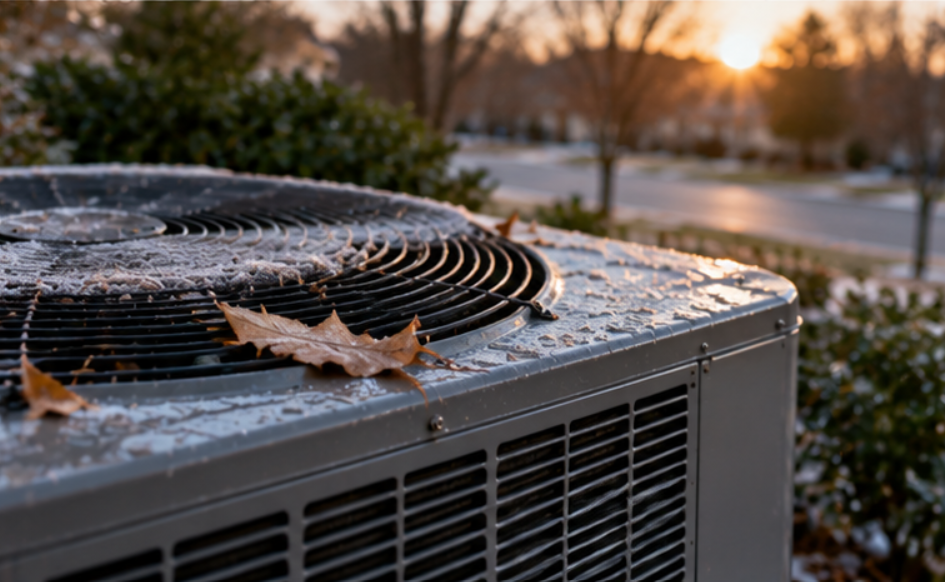
A heat pump does not burn fuel. It moves heat from the outdoor air into your house, and the harder the outdoor temperature drops, the harder it has to work to find that heat. On a mild afternoon it barely has to try, which is most of a Southlake winter. Light demand is exactly why a developing fault stays quiet.
Because the system coasts through the easy weeks, degraded output goes unnoticed for months. A compressor losing capacity, a defrost board that no longer fires, or strip heat quietly filling the gap all look fine when the house only needs a few degrees of lift. “It heats fine” is not evidence the system is healthy. It is evidence the weather has been kind.
The real test comes in the snap. DFW winters are mostly mild, but occasional severe cold fronts can push temperatures well below normal, exposing problems that stay hidden during milder weather. That is when hidden faults surface and emergency heating in Southlake suddenly matters, so the window to find them is fall, not during the freeze.
How Does a Heat Pump Actually Heat Your Home?
A heat pump makes heat without a flame because it does not create heat at all. It relocates it. Even cold outdoor air holds usable thermal energy, and refrigerant circulating through the outdoor coil absorbs that energy, then releases it indoors. In summer the same machine runs the process backward to pull heat out of your house.
The part that makes this reversal possible is the reversing valve. It redirects refrigerant flow so the outdoor coil and indoor coil swap jobs between heating and cooling. In heating mode the outdoor coil absorbs heat and the indoor coil gives it off. If that valve sticks or leaks, the system can run and still deliver cool air, which fools people into blaming the thermostat.
Understanding that heat is being moved, not burned, explains every fault in this article. Moving heat from cold air causes frost on the outdoor coil. Pulling less heat than the house needs is what triggers backup electric heat. Once the mechanism is clear, the symptoms stop looking random and start pointing at specific parts.
What Is the Defrost Cycle and How Do You Know It Is Failing?
The defrost cycle helps a heat pump remove frost from its outdoor coil during heating. Understanding how this process works makes it easier to recognize when something is wrong, especially during Southlake’s damp, chilly weather.
Frost Formation on the Outdoor Coil
In heating mode, the outdoor coil absorbs heat from the surrounding air and becomes cold enough for moisture to collect and freeze. A thin layer of frost is normal when temperatures are near freezing. However, heavy frost can restrict airflow, reduce heat transfer, and make it harder for the heat pump to warm your home efficiently.
Normal Defrost Cycle Operation
When frost builds up, the heat pump temporarily reverses its operation to warm the outdoor coil and melt the ice. During this process, the indoor blower may pause, and the air from your vents might briefly feel cooler. You may also notice steam rising from the outdoor unit. These signs are usually normal if heating resumes shortly afterward.
Common Signs of Defrost Control Failure
A faulty defrost control board or coil temperature sensor can prevent the system from clearing frost properly. You may notice ice accumulating over time, frequent defrost cycles, or extended periods of cool air from the vents. If the outdoor unit repeatedly switches operating modes without restoring consistent heating, a professional inspection can help identify the underlying fault.
Heavy Ice Buildup That Requires Attention
A light coating of frost is generally harmless, but thick ice covering the outdoor coil, surrounding the fan, or encasing much of the unit signals a potential problem. Continuing to operate the heat pump in these conditions can damage components and strain the compressor. Turn the system off if heavy ice persists, and arrange a professional inspection before restarting it.
Professional Defrost System Inspection
Diagnosing a defrost problem requires more than checking the thermostat or replacing the air filter. A technician can test the defrost control board, coil temperature sensor, and reversing valve to determine whether the system enters and exits defrost correctly. These components work together, and testing them systematically helps distinguish a control failure from another mechanical or electrical issue.
A properly functioning defrost cycle helps your heat pump maintain reliable heating during cold, damp weather. If you notice persistent ice buildup, repeated defrosting, or inconsistent indoor temperatures, schedule professional heat pump maintenance before the problem leads to a more significant breakdown.
Why Is Your Heat Pump Running Up the Electric Bill?
Your house feels fine, but the winter bill climbs anyway. One common contributor is auxiliary heat, the electric resistance strips that may be installed inside the air handler. They supplement the heat pump when additional capacity is needed, including during colder weather and some defrost cycles.
Auxiliary strip heat draws far more power than normal heat-pump operation, so unnecessary use can show up quickly on the electric bill even while the house stays comfortable. A weak heat pump, thermostat problem, or incorrect auxiliary-heat settings can all cause the strips to run more than necessary. Here is what to watch and check:
- Watch the aux heat indicator: Frequent auxiliary heat during mild weather may be worth investigating, especially if you have not made a large thermostat adjustment
- Note any sudden bill jump: A spike with no change in weather or habits often traces back to strip heat running long
- Check the air filter: A clogged filter starves airflow, drops output, and can push the system onto backup heat
- Feel the vent air temperature: Lukewarm air with high bills suggests the heat pump is struggling and aux is covering
Dual-fuel systems behave differently because a gas furnace may provide backup heat instead of electric resistance strips. For heat pump owners, a rising winter bill can still be an important clue that the system or its backup heat deserves a closer look.
If the system has a gas backup and that is the piece acting up, furnace repair in Southlake addresses a different failure than a stuck aux call does. Knowing which of the two is the culprit saves you from chasing the wrong fix as the cold sets in.
Why Does a Heat Pump Short Cycle in Winter?
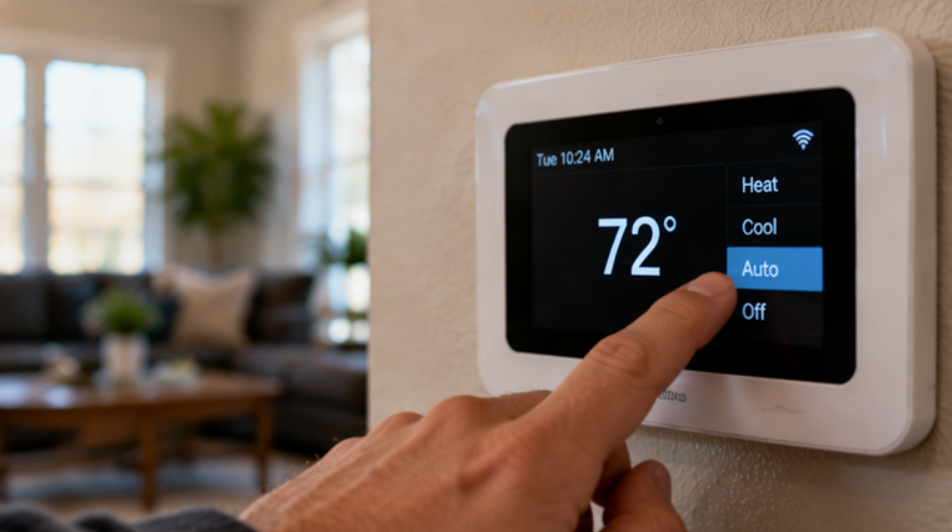
Short cycling is the system switching on and off every few minutes instead of running in longer, steadier cycles. It wears parts, wastes energy, and never lets the house reach a stable temperature. The frustrating part is that several unrelated faults produce the same on-off pattern, so the symptom alone does not tell you the cause.
The table below covers several possible causes, starting with the easiest homeowner checks.
| Possible cause | What it means | How to tell it apart |
|---|---|---|
| Dirty filter or blocked vents | Restricted airflow can contribute to abnormal cycling or reduced performance | Check the filter and open vents first; cheapest to rule out |
| Debris on the outdoor coil | Leaves and dirt can restrict heat transfer and contribute to performance problems | Visible around the condenser; clearing it is a quick fix |
| Failing defrost control | Defrost-control problems can interrupt normal heating operation | Air turns cool mid-cycle on a pattern, not just when cold |
| Low refrigerant charge | Low refrigerant charge can reduce heating capacity and contribute to abnormal cycling | Needs gauges; never a homeowner check |
Start with the filter and the outdoor unit because they are easy to inspect. If the system still short cycles after those basic checks, professional diagnosis is the next step rather than continuing to guess at the cause.
When Should a Heat Pump Be Serviced in a Mild-Winter Climate?
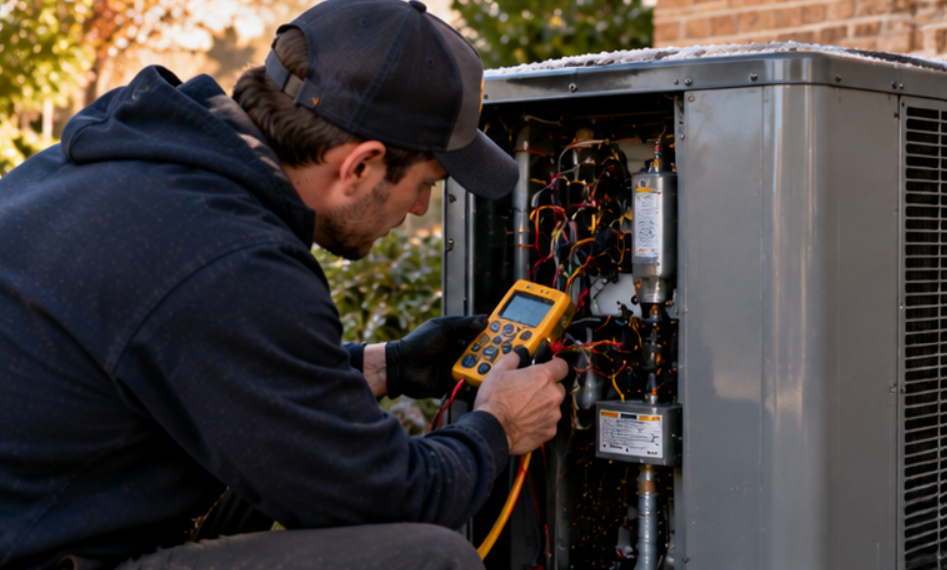
Professional heat pump maintenance in Southlake should be scheduled twice a year, following Bryant’s manufacturer guidance of a spring and a fall visit. The spring check preps the cooling side; the fall check puts the system into heating mode and tests the parts a mild winter never stresses.
That twice-a-year rhythm is a useful baseline, with the exact maintenance tasks adjusted for the system’s age, condition, and manufacturer guidance.
A fall heating-mode inspection should confirm the parts a mild season leaves untested are still working. It covers:
- The reversing valve shifting cleanly between heating and cooling
- The defrost cycle entering and exiting on cue
- Auxiliary heat engaging only when it should
- Refrigerant charge and compressor amp draw within range
Testing those heating components is skilled work, which is why it helps to confirm your technician is qualified on the equipment; Ideal In Air’s technicians hold the York Certified Comfort Expert qualification for exactly this kind of diagnosis.
North Texas temperature swings can have a system moving between heating and cooling within the same week, which makes it especially useful to verify heating, cooling, defrost, and reversing-valve operation during maintenance.
Have the system checked in fall before the first real cold, so a weak compressor, a sticking valve, or a dead defrost control turns up while the system is only being asked for mild heat. The first hard freeze is when those faults surface, which makes fall the window to act.
Why Choose Ideal In Air for Heat Pump Maintenance in Southlake?
Southlake’s mild weather can make it easy to overlook heating performance until the first hard freeze puts your heat pump to the test. Ideal In Air provides professional heat pump maintenance in Southlake, including heating-mode checks that help identify potential issues with defrost operation, auxiliary heat, and overall system performance before colder weather arrives.
If your heat pump is aging, struggling to maintain comfortable temperatures, or requiring frequent repairs, exploring heat pump installation may help you determine whether replacement is a better long-term option. Ideal In Air can help you evaluate your system’s condition and choose an option suited to your home’s heating and cooling needs.
Don’t wait until a cold night exposes a problem with your system. Call Ideal In Air at (817) 663-4933 or book online to schedule heat pump maintenance before winter arrives.
Frequently Asked Questions
Is it normal for my heat pump to blow cool air for a few minutes in cold weather?
Yes. During a defrost cycle the system briefly reverses to melt frost off the outdoor coil, and the indoor air can feel cool for a few minutes. It should return to warm heat shortly after. If cool air lingers much longer or returns on a repeating pattern, the defrost control may be the issue.
Why is there steam coming off my outdoor unit in winter?
That is usually normal. When the heat pump runs a defrost cycle it melts frost off the outdoor coil, and the warm moisture rising off the unit looks like steam. It passes within a few minutes. Persistent heavy ice encasing the coil, not steam, is the thing to worry about.
Should I switch my thermostat to emergency heat in a cold snap?
Emergency heat is generally intended for situations where the heat pump cannot operate properly or a technician instructs you to use it. On systems with electric backup heat, emergency mode bypasses normal heat-pump operation and can use substantially more electricity, so it should not be used as the default setting during routine cold weather.
How much does a heat pump winter tune-up cost?
Price depends on the system and what the inspection finds. Rather than chase a single figure, ask what the visit tests in heating mode. A real heating check covers the reversing valve, defrost control, and auxiliary heat, not just a filter, and that is where the value of the visit actually sits.
My heat pump is over 12 years old. Is a fault worth repairing?
It depends on the part and the system’s overall condition. A defrost board or a capacitor is usually worth fixing on an older unit. A failing compressor is where the math shifts, since it is the most expensive component and its failure on an aging system is often the point to weigh replacement.