Skip to content


On a cold Southlake morning, you might notice that one room feels warmer than another, or that your vents keep moving air even after the furnace stops heating. Before assuming something is wrong, check the fan switch on your thermostat. Most thermostats offer two options, ON and AUTO, and choosing the right one can affect indoor comfort, electricity use, and how air circulates through your home.
For most homes with a conventional single-speed furnace, AUTO is usually the more practical winter default. It runs the blower when the furnace is heating and stops it after the heating cycle ends. ON keeps the blower running continuously, which can help distribute air and increase filtration, but it also uses more electricity. The best choice depends on your furnace's blower motor, your home's layout, and whether you need additional air circulation.
What Is the Difference Between ON and AUTO on a Furnace?
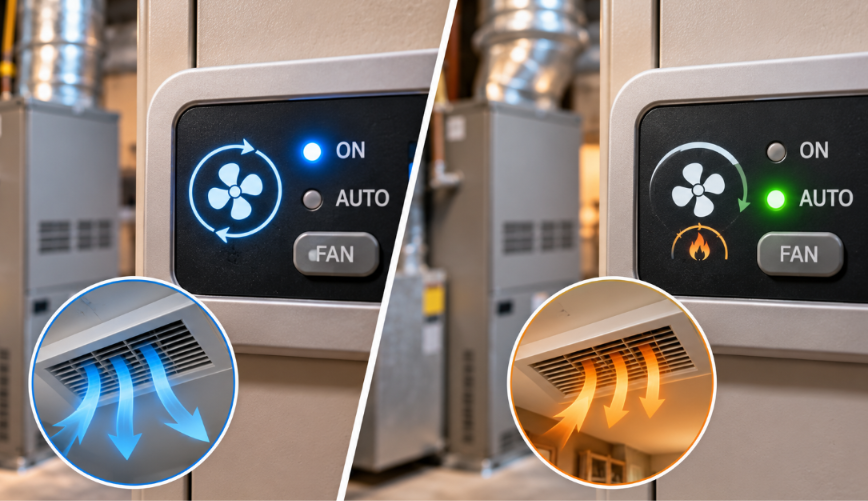
The fan setting controls when your furnace's indoor blower circulates air through the ductwork. It does not control when the burner produces heat. Your thermostat still decides when the home needs heating based on its temperature setting.
When the fan is set to AUTO:
- The blower operates during a heating cycle, following the furnace's programmed startup and shutdown timing.
- It stops after the heating cycle finishes and the furnace completes its normal fan-off delay.
- Air moves through the vents mainly when the system is actively heating.
- The blower uses less electricity than it would during continuous operation.
When the fan is set to ON:
- The blower runs continuously, including between heating cycles.
- Air continues circulating through the supply and return ducts.
- More air passes through the furnace filter over time.
- The blower uses additional electricity even when the burner is not producing heat.
The difference is straightforward: AUTO connects blower operation to heating demand, while ON keeps air moving regardless of whether the furnace is heating. Neither setting makes the furnace produce more heat. They simply change when heated air is distributed and how often indoor air passes through the filter.
Why Does My Furnace Blow Cool Air When the Fan Is Set to ON?
This is one of the most common reasons homeowners switch their thermostat back to AUTO. When the fan is set to ON, the blower continues running after the burner shuts off. Since the furnace is no longer adding heat to the air, the vents may deliver room-temperature or slightly cool air until the next heating cycle begins.
That does not automatically mean your furnace has a problem. The important distinction is whether the air feels cool between heating cycles or while the furnace is actively trying to heat your home.
If the air becomes warm when the burner is operating and turns cooler after the heating cycle ends, the fan may simply be circulating unheated air. However, if the vents continue blowing cool air during an active call for heat, the system may have an ignition, burner, airflow, or gas-supply problem.
You can check the thermostat setting and make sure it is in HEAT mode with the desired temperature above the current room temperature. If the furnace still cannot produce warm air during a heating cycle, avoid repeatedly adjusting the fan switch. Arrange a professional furnace repair service in Southlake to identify the cause.
Does Leaving the Furnace Fan on ON Increase Your Electricity Bill?
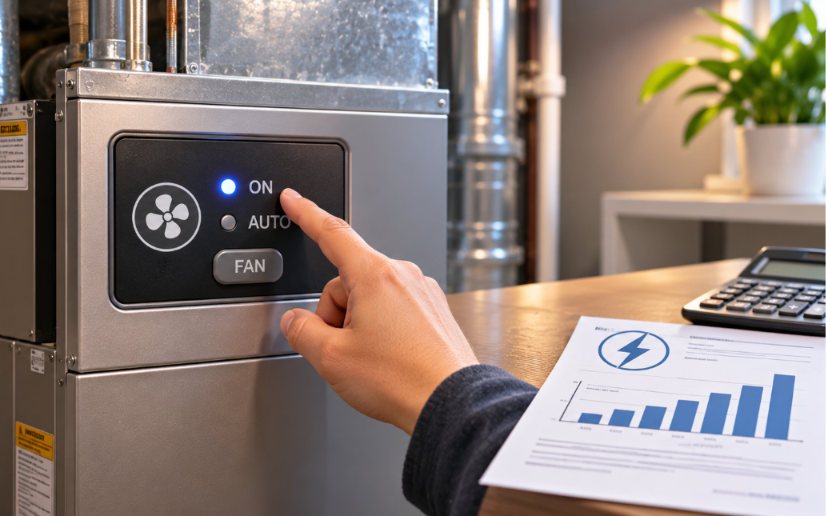
Yes. Continuous fan operation can increase electricity use because the blower motor runs for more hours. The amount depends on the motor type, its wattage, your electricity rate, and how long you leave the fan running.
Older furnaces with permanent split capacitor (PSC) blower motors generally use more electricity during continuous operation than modern electronically commutated motors (ECM). A conventional single-speed motor operates at a fixed speed whenever it runs. An ECM blower may use substantially less electricity during supported low-speed circulation, although actual power use depends on the motor, airflow setting, and duct system.
You can estimate the additional cost with this formula:
Blower wattage ÷ 1,000 × operating hours × electricity rate = estimated electricity cost.
For example, a hypothetical 400-watt blower running continuously for 24 hours uses 9.6 kilowatt-hours of electricity. At an assumed rate of $0.15 per kWh, that would cost about $1.44 per day. Your actual cost could be higher or lower depending on the motor and your electricity plan.
This is why AUTO is usually the practical starting point for an older single-speed furnace. You get the airflow needed during heating cycles without paying to operate the blower around the clock. If you want more circulation, a timed fan or circulate setting may offer a useful middle ground.
When Should You Set Your Furnace Fan to ON During Winter?
AUTO is usually the best setting for a standard single-speed furnace, but ON can be useful when you want better air circulation or more consistent temperatures throughout your home. Before leaving the blower running continuously, consider your home's layout, filter requirements, and furnace type. Here are four situations where ON or a timed circulation setting may make sense.
To Reduce Temperature Differences Between Rooms
In some two-story Southlake homes, upstairs bedrooms feel warmer while downstairs living areas remain cooler. Setting the fan to ON may help mix air between floors and reduce some temperature differences throughout the house. However, continuous airflow cannot correct poorly designed ductwork, inadequate insulation, or blocked return vents. Persistent cold spots may require a professional airflow inspection.
To Increase Air Filtration
When the fan runs continuously, more indoor air passes through the furnace filter instead of circulating only during heating cycles. This can help capture additional dust, pet dander, and other airborne particles. The benefit depends on your filter's efficiency and condition. Because more air passes through the filter, continuous fan operation may also mean the filter needs to be checked or replaced more often. Check its specifications and replacement schedule, especially if your household has pets or allergy concerns.
When Your Furnace Has a Variable-Speed Blower
A variable-speed blower can adjust its airflow instead of operating at one fixed speed. Some models support continuous low-speed circulation, which can improve air distribution without using as much electricity as an older single-speed motor. If your furnace has this feature, check the manufacturer's recommendations or ask an HVAC technician which fan setting suits your equipment.
When Your Thermostat Has a CIRCULATE Setting
Some programmable and smart thermostats include a CIRCULATE setting that runs the blower for selected periods throughout each hour. This provides additional airflow without operating the fan around the clock. It can be a practical option when you want to reduce temperature differences between rooms while limiting electricity use.
If you are unsure whether continuous circulation will benefit your home, start by checking your furnace filter, thermostat options, and blower type. Persistent uneven heating or weak airflow may indicate a problem that changing the fan setting cannot resolve. A professional furnace maintenance service in Southlake can help identify airflow restrictions and determine whether your system is operating as intended.
Does Your Furnace Blower Type Change the Best Setting?
Yes. The blower motor can make a significant difference in the cost and comfort of continuous fan operation. Two furnaces can respond differently to the same thermostat setting because their motors and control systems are not identical.
| Blower type | What to expect with ON | Practical winter approach |
|---|---|---|
| Single-speed PSC | Runs at a fixed speed and can use more electricity during continuous operation | AUTO is generally the better default |
| Variable-speed ECM | Can operate at lower speeds and may use less electricity for continuous circulation | ON or a supported circulation mode may be practical |
| Multi-speed blower | May offer different airflow settings depending on the furnace controls | Follow the manufacturer's recommended settings |
Do not assume that every newer furnace has a variable-speed blower or that every ECM motor should run continuously. The furnace model, thermostat configuration, and manufacturer's instructions determine which settings are appropriate. Some equipment also uses a programmed fan delay after the burner shuts down to move remaining heat into the home and protect normal operation.
If you are considering replacing an older furnace, ask about blower technology and how it affects comfort, circulation, and operating costs. A qualified York dealer in Southlake can explain available equipment options and help you compare systems suited to your home.
How Do Southlake Winters Affect Your Furnace Fan Setting?
North Texas winters can shift quickly between cold mornings, mild afternoons, and occasional freezing weather. Your furnace may run frequently during a cold spell and barely operate when temperatures rise again. Your fan setting should account for these changing conditions rather than remain on one setting without consideration.
A few local factors are worth keeping in mind:
- Short cold spells: AUTO is often sufficient because the blower runs whenever the furnace needs to heat the home.
- Mild winter afternoons: ON may circulate air even when heating is unnecessary, which can make the vents feel cool.
- Two-story floor plans: A circulate setting may help reduce temperature differences between upstairs and downstairs rooms.
- Spring and fall temperature swings: Reconsider continuous fan operation when your air conditioner starts running. In many conventional cooling systems, continuous fan operation can move moisture off the evaporator coil and back into the home.
- Indoor air quality concerns: Continuous circulation can increase filtration, but filter selection and regular replacement still matter.
For most Southlake homeowners, AUTO is a sensible default during winter. Use ON or a timed circulation mode when you have a clear reason to keep air moving, and review the setting as the weather changes.
How Can Furnace Maintenance Help Improve Airflow?
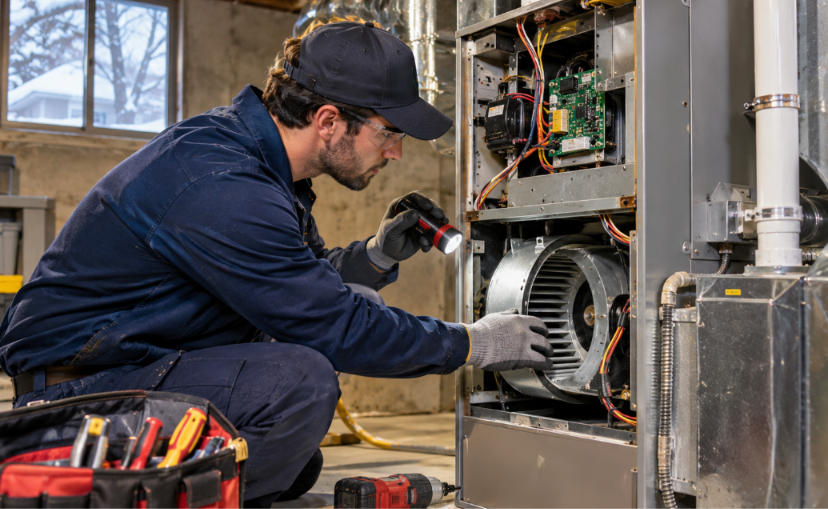
The thermostat fan setting cannot compensate for a furnace with restricted airflow or neglected components. A dirty filter, blocked return grille, blower problem, or duct leak can reduce how effectively heated air reaches your rooms.
Routine maintenance helps identify these problems before they affect comfort during a cold spell. A professional furnace maintenance visit should include checks appropriate to the equipment, such as:
- Inspecting the air filter and checking for restricted airflow.
- Examining the blower assembly and its operation.
- Checking electrical connections and system controls.
- Inspecting the burner and ignition components.
- Inspecting accessible heat-exchanger surfaces and other safety-related components.
- Checking the thermostat's operation and heating cycle.
Homeowners should also check their filters regularly and keep supply vents and return grilles clear of furniture, rugs, and other obstructions. Follow the filter replacement schedule recommended for your equipment and household conditions.
If your furnace runs for unusually long periods without reaching the thermostat setting, struggles to heat certain rooms, or makes unusual noises, do not rely on changing the fan setting to hide the symptoms. A professional furnace maintenance appointment in Southlake can help determine whether airflow restrictions or another issue is affecting performance.
Which Furnace Fan Setting Should You Use This Winter?
The right setting depends on your equipment and what you want to improve. For most homes with a conventional single-speed furnace, AUTO is the best starting point because it limits unnecessary blower operation and reduces room-temperature air circulation between heating cycles.
Use this quick guide when deciding:
- Choose AUTO if your home heats evenly and you do not need additional air circulation.
- Try ON if you want continuous filtration or need to mix air between rooms, and you are comfortable with the additional electricity use.
- Use CIRCULATE if your thermostat offers timed fan operation and you want a balance between airflow and energy use.
- Consider continuous low-speed circulation if your furnace has a variable-speed blower and the manufacturer supports that operating mode.
- Return to AUTO during cooling season unless your equipment or thermostat instructions recommend another setting.
If your furnace still produces cool air during an active heating cycle, or certain rooms remain uncomfortable despite appropriate fan settings, have the system inspected. The problem may involve the furnace, ductwork, or airflow rather than the thermostat.
Why Choose Ideal In Air for Furnace Service in Southlake?
At Ideal In Air, we help homeowners in Southlake understand why their furnaces are not heating or circulating air as expected. A cool vent does not always mean the furnace has failed. It may be related to the thermostat setting, blower operation, restricted airflow, or a mechanical issue. We inspect the system to identify the cause before recommending the next step.
If your furnace needs attention, we provide furnace repair in Southlake and routine furnace maintenance to help keep heating equipment operating properly. As a York dealer in Southlake, we can also discuss compatible equipment options if your existing furnace is nearing replacement.
Whether you need help with uneven heating, unusual blower operation, or an aging furnace, we can help you understand your options. Call Ideal In Air at (817) 663-4933 or book an appointment online to schedule service.
Frequently Asked Questions
Is it better to leave the furnace fan on AUTO or ON in winter?
AUTO is generally better for a conventional single-speed furnace because the blower runs during heating cycles rather than continuously. ON can help circulate air and increase filtration, but it uses additional electricity and may send room-temperature air through the vents between heating cycles.
Will running my furnace fan continuously make my house warmer?
Not by itself. The blower moves air but does not generate heat. Continuous circulation may help distribute existing heat more evenly between rooms or floors, but it cannot correct an undersized furnace, poor insulation, or significant ductwork problems.
Why does my furnace fan keep running after the heat turns off?
The blower may continue running briefly after the burner shuts down because the furnace uses a programmed fan-off delay to move remaining heat into your home. If it continues running much longer than expected, check the thermostat setting and consult your furnace manual or an HVAC technician.
Should I run my furnace fan on ON if I have allergies?
Continuous fan operation can move more air through your filter, which may help capture airborne particles. However, the benefit depends on the filter's efficiency and whether your furnace can handle its airflow resistance. Consider your equipment's filter recommendations and address other indoor air quality sources as well.
Can I switch between ON and AUTO while my furnace is running?
Most thermostats allow you to change the fan setting without turning off the heating system. However, follow your thermostat and furnace manufacturer's instructions. If changing the setting causes unusual operation or the furnace stops heating correctly, contact an HVAC technician rather than repeatedly adjusting the controls.