Skip to content

Your furnace is somewhere past 10 years old, it still fires up on a cold morning, but you have started wondering whether this is the winter it finally quits on you during a hard freeze. Guessing wrong in either direction costs real money. Replace too early and you throw away good equipment; wait too long and a dead unit mid-freeze means an emergency job at the worst possible price. This guide covers how long a gas furnace realistically lasts here, what wears out first, and how to tell repair from replace.
So, how long does a furnace last? A well-maintained gas furnace typically lasts about 15 to 20 years. Some high-quality systems with good installation and consistent maintenance can last longer, occasionally approaching 30 years. North Texas's shorter heating season can reduce burner runtime compared with colder climates, but total furnace life still depends on installation, airflow, maintenance, equipment quality, and year-round blower use.
How Long Does a Gas Furnace Last in Texas?
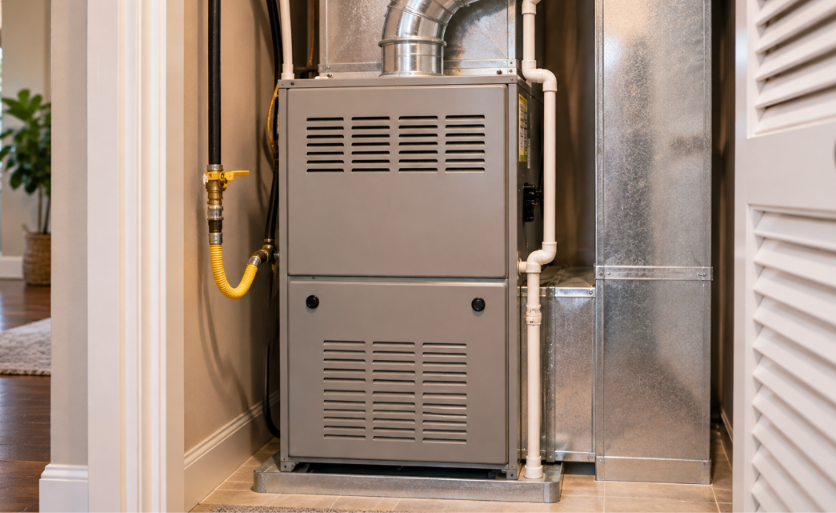
A furnace is the gas-fired unit that heats the air your blower pushes through the house. According to Carrier's equipment lifespan guidance, a furnace may last 15 to 30 years, while air conditioners and heat pumps typically run 15 to 20. That wide span is the first thing to understand: the number depends heavily on how hard the unit has worked.
Some North Texas furnaces remain in service well beyond 15 years, but age alone does not tell you how much useful life remains. A shorter heating season can reduce burner runtime, while the blower may still operate during cooling season.
That is the catch with this market, though. Light use stretches calendar age, so a furnace here can post 20-plus years on paper while quietly carrying a problem nobody has caught. Age tells you when to start paying attention, not when to replace. What it is doing under load is the real measure.
Does a Texas Furnace Last Longer Because It Runs Less?
Light winter use can reduce burner runtime, but it does not mean every furnace component sits idle most of the year. In many central HVAC systems, the blower also operates during cooling season. That is why age, maintenance history, airflow, and actual condition matter more than calendar years alone.
Some developing ignition, blower, airflow, or combustion problems may not become obvious until the furnace begins running longer cycles during a cold spell. That is why a preseason inspection can be useful before the first hard freeze.
So low run-hours cut both ways. The mechanical wear is genuinely slower, and that is good. But calendar age understates your risk, because a developing fault can go unnoticed for years without the sustained load that would reveal it. The practical move is to have the unit checked before the cold arrives, not to assume a quiet furnace is a healthy one.
What Actually Wears Out First on a Texas Furnace?
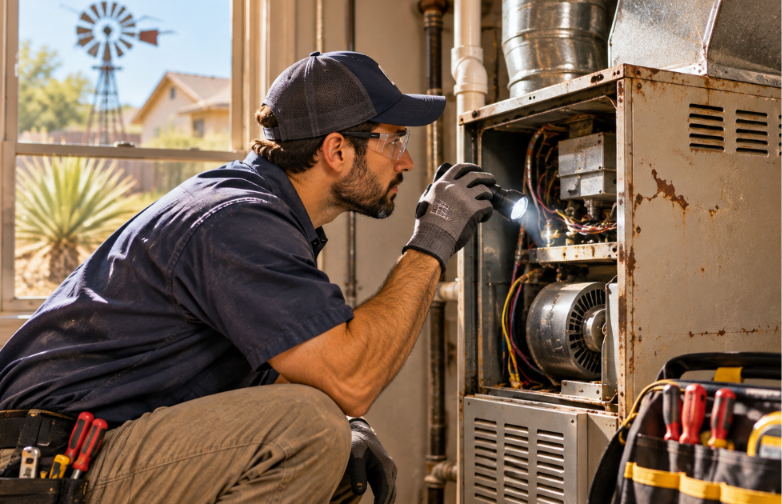
Not every component ages at the same rate, and some failures merely cost money while others raise safety concerns. Many North Texas systems are installed in attics, where heat and dust can add stress to electrical and mechanical components and make inspection more difficult. Here is what tends to go, and what each one means.
The Heat Exchanger
The heat exchanger is the metal chamber that separates combustion gases from the air moving through the home. A cracked heat exchanger is a serious safety concern because it can allow combustion gases, including carbon monoxide, into the home's airflow. Stop using the furnace until it has been professionally inspected. On an older system, replacement may be more practical than replacing the heat exchanger.
The Blower Motor and Bearings
The blower motor drives air across the heat exchanger and through the ducts. As bearings dry out and wear, you may hear grinding or a rising hum, and the motor draws more current trying to keep up. A blower is a repairable part on a younger furnace, but on a 15-plus-year unit its failure is often the moment the replace conversation starts.
The Igniter and Flame Sensor
The igniter lights the burners and the flame sensor confirms the flame is present. Both are consumable parts that fail with age and heat cycling, and a dirty flame sensor is a frequent cause of a furnace that lights then shuts off. These are cheap fixes, usually quick, and almost never a reason on their own to replace the whole unit.
The Control Board and Capacitor
The control board sequences the startup process, and some blower motors use a capacitor to help them start and run correctly. A failed capacitor, control board, or blower motor can all cause startup or airflow problems, so the cause needs to be diagnosed before deciding whether to repair or replace the furnace.
Frequent short cycling can increase wear regardless of furnace type and may point to sizing, airflow, thermostat, or control issues.
For a reader weighing a quote, comparing component and build quality across a York dealer in Southlake can inform what a replacement would actually get you. Which part failed decides whether you are looking at a repair or the end.
What Makes a Furnace Wear Out Faster or Slower?
Lifespan is not fixed at the factory. A handful of factors, most of them within your control, decide whether a unit reaches the top of its range or dies early.
Airflow and static pressure are major factors in furnace longevity. When a clogged filter or undersized duct drives static pressure up, the furnace may overheat and the blower can work harder.
Here are the factors that move the needle most:
- Annual maintenance: A furnace should get a professional tune-up about once a year, ideally in early fall before the first freeze.
- Airflow and filter changes: A dirty filter raises static pressure and overheats the heat exchanger, so change it on schedule.
- Correct sizing: An oversized unit short-cycles, piling on start-stop wear that shortens component life.
- Install quality: Poor duct connections and sloppy gas setup stress the system from day one.
Early fall is the right window for a tune-up in this market, because it catches a developing fault before the season that would expose it. No single service guarantees the top of the lifespan range; sizing and install quality set a ceiling that maintenance alone cannot raise. But a yearly check is the cheapest way to avoid the preventable failures, and it is the one most homeowners skip.
What Are the Signs a Furnace Is Near the End?
A failing furnace rarely dies without warning. The trick is telling a symptom that needs a quick repair from one that signals the unit is winding down. Some of these are mild annoyances, and some mean you should stop running the furnace until it is inspected.
| Sign | What it may mean | Urgency |
|---|---|---|
| Yellow or abnormal burner flame | Possible combustion, burner, gas-pressure, or venting issue | High, schedule professional inspection |
| Rising gas bills with no rate change | Efficiency has slipped as the unit ages | Moderate, worth evaluating |
| Frequent short cycling | Overheating, sizing, or a dying control component | Moderate to high |
| Grinding or screeching on startup | Blower motor bearings failing | Moderate, plan the repair |
| Soot, rust, or cracking near the exchanger | Possible heat exchanger failure | High, shut off and inspect |
| Repairs every season | System is past economical life | Low urgency, plan replacement |
One symptom in isolation proves less than a pattern over time. A single short-cycle on a cold morning may be nothing; the same fault every startup is a trend. If you see anything in the high-urgency rows, that is the line where a safe furnace becomes a question mark, and it is worth knowing the answer before deciding what to spend.
When Should You Replace a Furnace Instead of Repairing It?
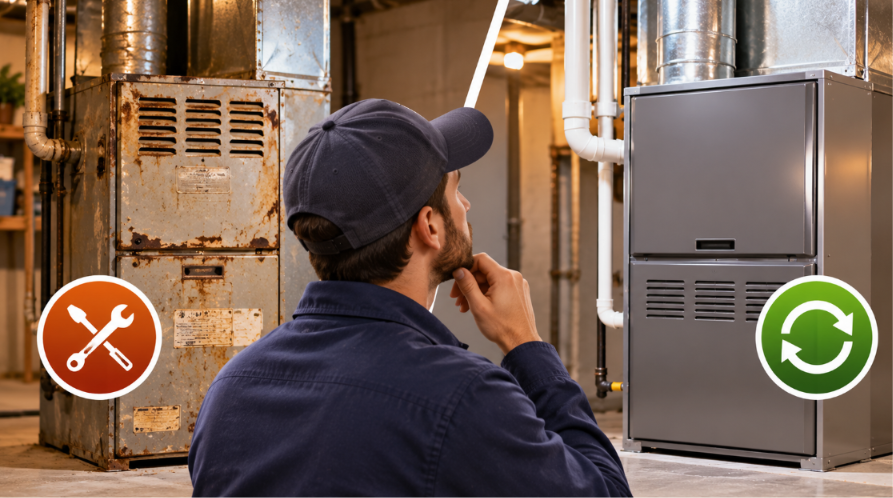
A furnace reaching 15 years old does not automatically mean it needs replacement. In Texas, where heating systems may sit unused for long stretches and then run hard during a sudden cold snap, the condition of the equipment matters as much as its age. If your furnace is approaching the 15-to-20-year range, compare the cost of another repair with its remaining expected service life.
Repair costs are one part of that decision. If a major repair represents a substantial share of the cost of a new furnace, replacement may be the better long-term investment, especially if the system has needed repeated service. A smaller repair on a well-maintained furnace may still make sense, even if the unit is older.
Before deciding whether to repair or replace your Texas furnace, consider:
- Age and service history: Has the furnace reached the typical 15-to-20-year range, and has it needed frequent repairs?
- Heat exchanger condition: A cracked heat exchanger can create a serious safety concern and may make replacement necessary.
- Repair expense: Compare the quoted repair cost with the price of installing a new system.
- Heating performance: Longer run times, uneven temperatures, and rising energy bills may indicate declining performance, although other issues can cause these symptoms.
- Current efficiency: An older furnace may cost more to operate than a newer, properly sized model with a higher AFUE rating.
Before approving an expensive repair, ask your HVAC technician to identify the failed component, inspect the furnace's overall condition, and explain whether other major parts show signs of wear. That information helps you judge whether the system has a reasonable amount of service life left or whether replacement is the more practical choice.
If your furnace is still repairable, a furnace repair visit in Southlake can help identify the problem and determine whether another repair makes financial sense. If the system is nearing the end of its useful life, planning a furnace installation and replacement in Southlake before the next Texas cold snap can give you more time to compare options and schedule the work.
Why Choose Ideal In Air for Furnace Service in Southlake?
A furnace approaching the end of its expected lifespan deserves a closer look before another heating season begins. At Ideal In Air, we help Southlake homeowners understand whether their system needs a specific repair or whether replacement is the more practical long-term option. Our goal is to give you a clear picture of your furnace's condition so you can make an informed decision.
We provide professional furnace repair in Southlake when a system can be restored with a reliable repair. If the equipment is aging, requires frequent service, or has a major component failure, we can also discuss your options for furnace installation and replacement. This helps you compare the cost of keeping your existing furnace with the benefits of installing a newer system.
Whether your furnace is 10 years old or approaching 20, an inspection can help you understand its current condition and plan for future heating costs. Call Ideal In Air at (817) 663-4933 or book an appointment online to schedule furnace service in Southlake.
Frequently Asked Questions
How do I find out how old my furnace is?
Look for the metal data plate inside the furnace cabinet, usually near the burner compartment, or check for an installation sticker on the unit. The serial number often contains the manufacturing date, although the format varies by brand. An HVAC technician can help identify the furnace's age if the label is unclear.
Does a furnace that still works mean it is fine to keep?
Not necessarily. A furnace may continue producing heat even when important components are worn or unsafe. A damaged heat exchanger, declining efficiency, or recurring performance problems may not be obvious during normal operation. If your furnace is older, have a technician inspect its condition before another heating season.
Is it worth replacing a working furnace just for efficiency?
Replacing a furnace solely to improve efficiency may not make financial sense if the existing system is relatively new and operating properly. However, if an older unit needs frequent repairs or is nearing the end of its lifespan, upgrading to a higher-efficiency model may help reduce fuel consumption.
How does hard water or Texas humidity affect furnace lifespan?
Hard water generally has little direct effect on a standard gas furnace because the system does not use water for heating. Humidity and moisture can be more concerning, particularly if condensation, poor ventilation, or drainage problems contribute to corrosion around furnace components.
Do I need a permit to replace a furnace in Texas?
Yes. In Southlake, installing or replacing a furnace requires a permit and inspection. Requirements can differ elsewhere in Texas, so homeowners outside Southlake should check with their local building department.
Will a new furnace lower my gas bill a lot?
A new furnace may reduce gas consumption if your existing system has a significantly lower AFUE rating. For example, upgrading from an 80% AFUE furnace to a 96% model means more of the fuel becomes usable heat. Actual savings depend on energy rates, usage, home insulation, and Texas winter temperatures.