Skip to content
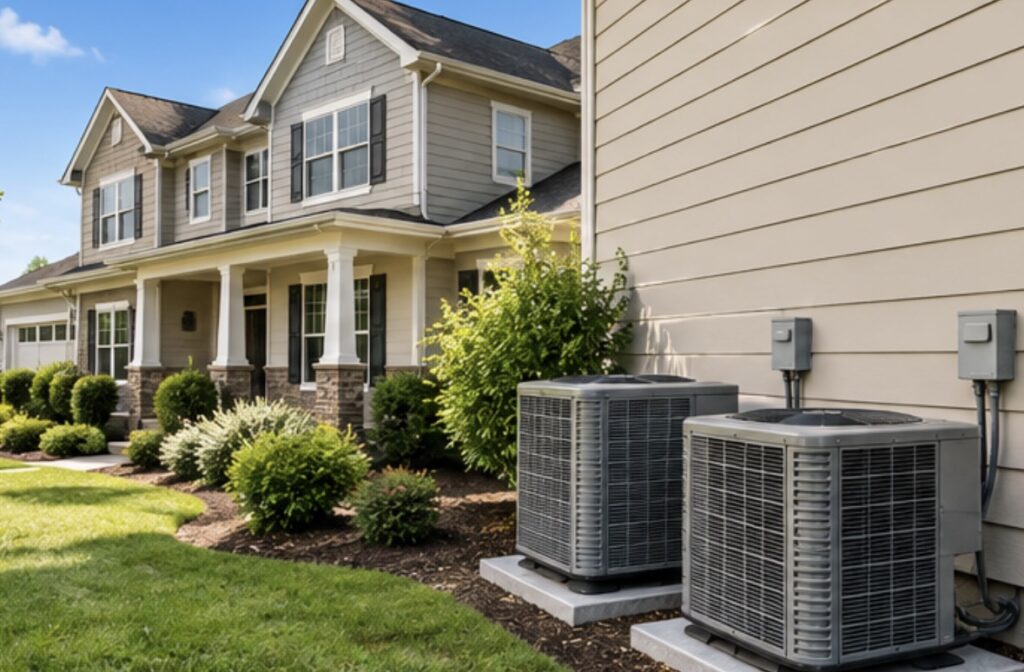
If your two-story Southlake home has a separate HVAC system for each floor, you may wonder whether both systems need to be serviced during the same appointment. One system might be newer and rarely cause problems, while the upstairs system may run much longer and struggle to keep the second floor comfortable during summer.
In most cases, servicing both systems during the same visit makes sense. The technician can inspect each system under similar conditions, compare their performance, and identify whether one unit is showing more wear than the other. However, servicing both does not mean both systems will necessarily need the same repairs or level of attention.
The decision should come down to the age, condition, runtime, and symptoms of each system. If one unit has a known problem or is significantly older, it may need to be prioritized even when the other system is included in the same maintenance appointment.
Is It Better to Service Both HVAC Systems Together?
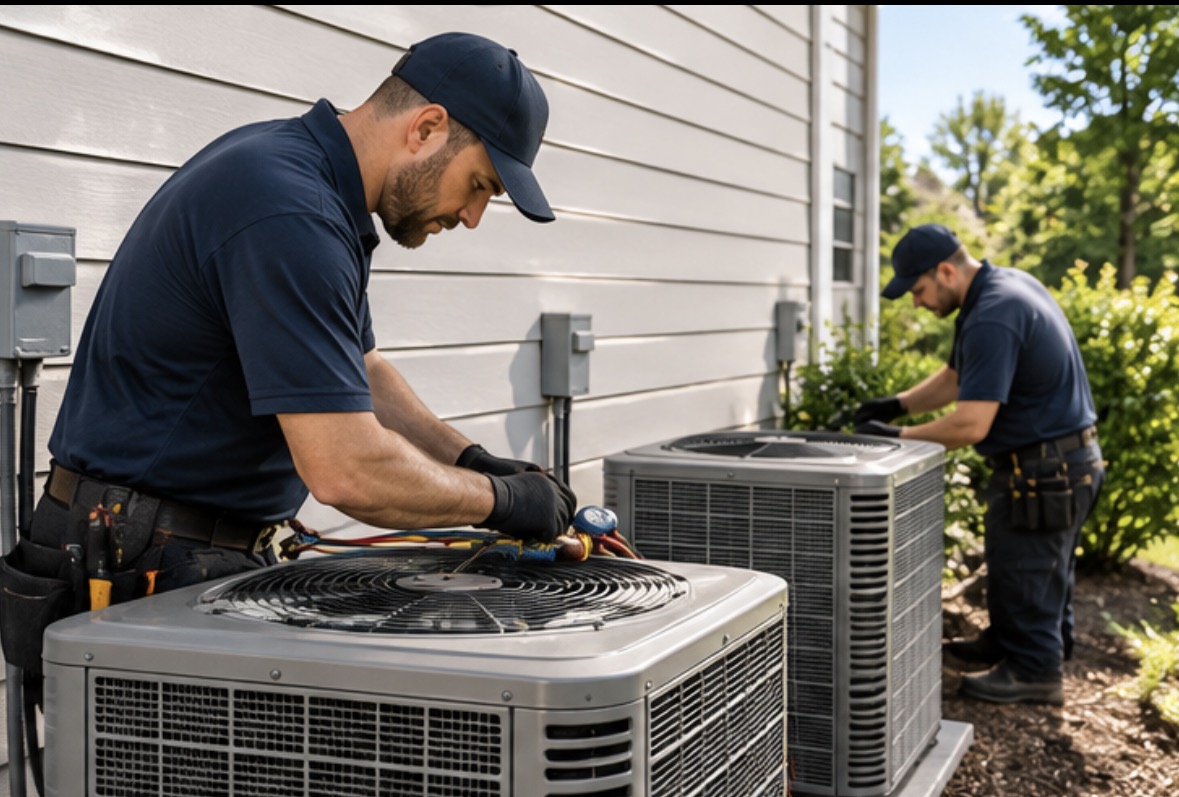
For a home with two separate HVAC systems, a combined maintenance appointment is usually the simplest approach. The technician can inspect the downstairs and upstairs systems during one visit instead of scheduling separate appointments for each floor.
There is also a practical diagnostic benefit. When both systems are checked on the same day, the technician can compare their operating readings and physical condition. If the downstairs system is cooling normally while the upstairs system has weak airflow or a noticeably different temperature response, that comparison can help identify where further investigation is needed.
Servicing both systems together can help you:
- Evaluate both units before peak cooling season
- Compare performance between floors
- Identify which system has more wear
- Catch developing problems on either unit
- Keep both systems on the same maintenance schedule
- Avoid scheduling a second maintenance appointment
The important distinction is that same appointment does not mean identical service recommendations. One system may simply need routine maintenance while the other may require additional diagnosis or repair.
When Should You Service Only One HVAC System First?
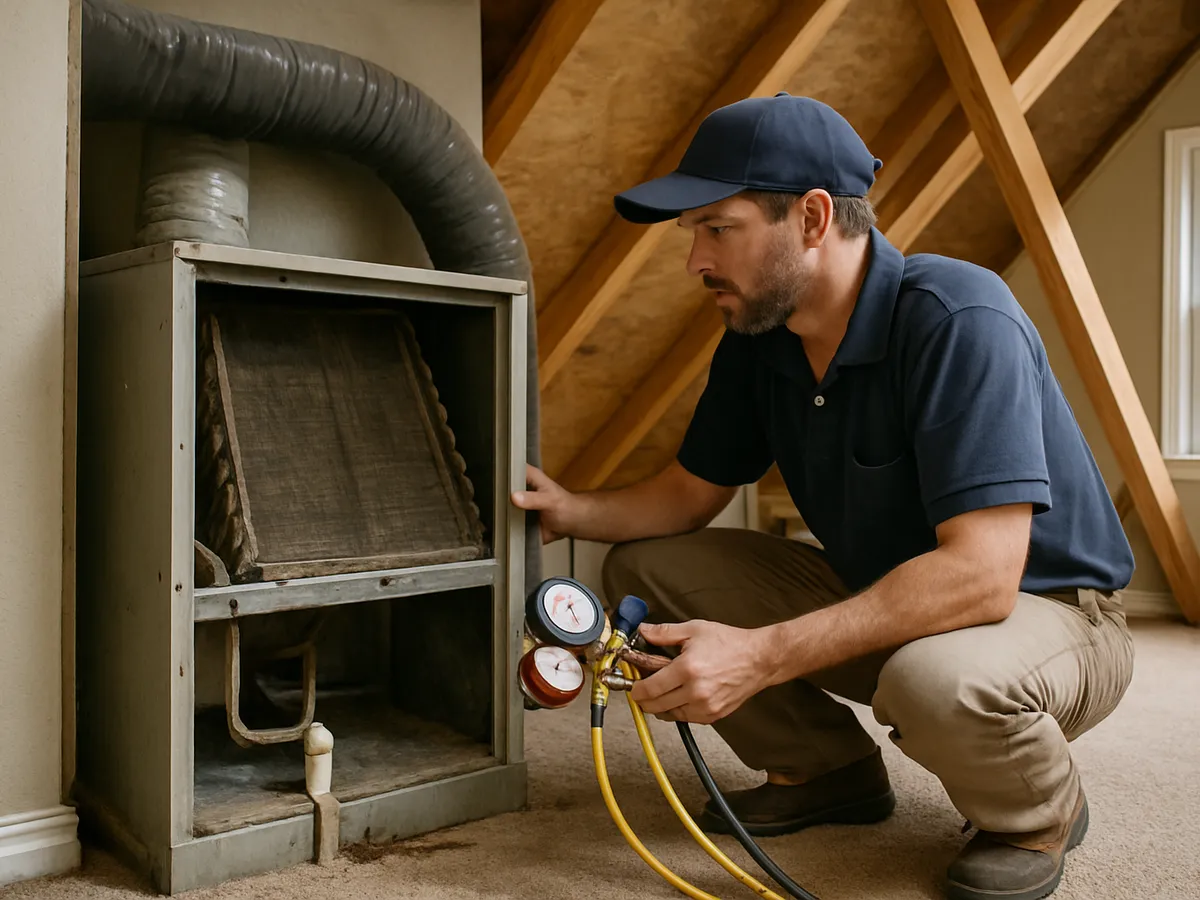
Having two HVAC systems does not mean both units will have the same maintenance needs. The upstairs system may run longer during Southlake's summer heat, while the downstairs system operates under a lighter load. Differences in equipment age, repair history, attic exposure, ductwork, and airflow can also cause one system to need attention before the other.
Pay closer attention to one system if you notice a consistent difference in how the two floors perform. For example, if the upstairs system runs while the downstairs system has already reached its thermostat setting, or if second-floor rooms remain warmer despite longer runtimes, the technician should investigate the reason rather than simply recommending routine maintenance.
| What You Notice | What the Technician Should Investigate |
|---|---|
| Upstairs runs much longer than downstairs | Airflow, ductwork, equipment capacity, and operating conditions |
| Second-floor rooms stay warmer | Air distribution, insulation, duct leakage, and system performance |
| One system has noticeably weaker airflow | Filter, blower, static pressure, duct restrictions, and registers |
| One unit has needed repeated repairs | Component condition, age, repair history, and remaining service life |
| One system is significantly older | Overall equipment condition and whether continued repairs make sense |
| One system recently had a major repair | Whether the repair resolved the original operating problem |
The goal is not to assume that the harder-working system is defective. A technician should compare the system's operating condition with the requirements of the home and equipment before recommending additional repairs. That distinction is important because longer runtime can result from the home's layout or load, not necessarily a failing component.
Why Does the Upstairs HVAC System Often Work Harder?
The second floor of a Southlake home can place different demands on an HVAC system than the first floor. Roof and attic temperatures, sun exposure, ductwork routed through unconditioned attic space, insulation levels, and the amount of conditioned space above the first floor can all affect how much cooling the upstairs requires.
This can show up as a familiar pattern: the downstairs reaches its thermostat setting while bedrooms upstairs remain warmer, or the upstairs system continues running through the afternoon. Before assuming the equipment is undersized or failing, a technician should evaluate airflow, duct conditions, static pressure, equipment performance, and the home's comfort pattern.
For a two-system home, that comparison is particularly useful. If the downstairs system is operating within expected conditions while the upstairs system shows restricted airflow, abnormal operating readings, or a significant performance difference, the technician has a measurable reason to investigate the upstairs system further instead of treating both units identically.
What Should a Technician Check on Both HVAC Systems?
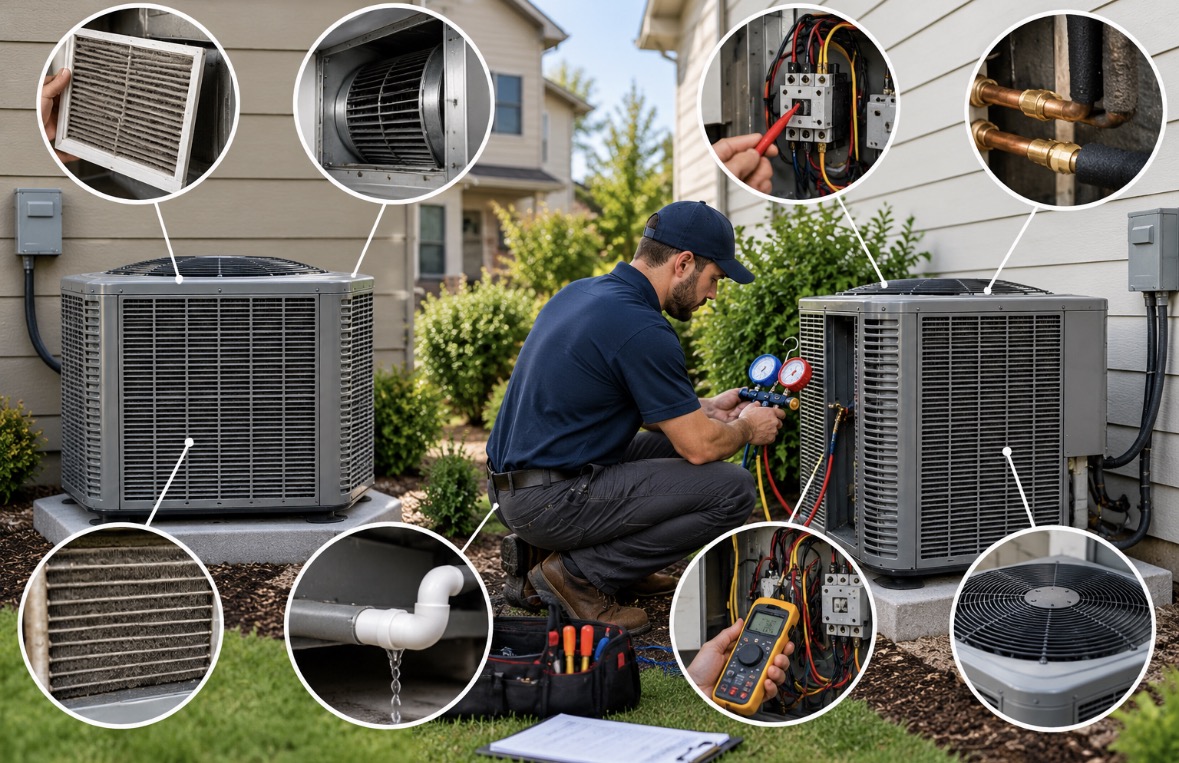
A proper two-system maintenance visit should evaluate each HVAC system independently and then compare the results. Simply confirming that both thermostats call for cooling does not tell you whether the systems are moving air properly, operating under the right conditions, or developing problems that could affect comfort later in the season.
A technician may evaluate:
- Airflow and static pressure to identify restrictions that can affect system performance
- Supply and return temperatures to evaluate how the system is transferring heat under current operating conditions
- Refrigerant operating conditions on applicable systems to identify signs that warrant further diagnosis
- Electrical components and connections for wear or operating concerns
- Evaporator and condenser coils for dirt or conditions that can reduce heat transfer
- Blower operation and other major moving components
- Condensate drainage to identify restrictions or drainage problems
- Filters and return-air pathways for conditions that may restrict airflow
- Thermostat operation and control response
The comparison between the two systems can be especially valuable. If both units are similar in age and equipment type but one shows substantially different airflow or operating conditions, that difference gives the technician a specific starting point for further diagnosis.
When Does It Make Sense to Replace Only One HVAC System?
A two-story home does not automatically need both HVAC systems replaced at the same time. If one system is significantly older, has a history of major repairs, or has a serious equipment problem while the other continues to operate reliably, each unit should be evaluated on its own condition.
Replacement should also account for the specific space the new system will serve. A technician should consider the home's heating and cooling load, equipment capacity, existing ductwork, airflow, efficiency, and installation conditions rather than simply matching the size or efficiency of the other system.
If a replacement is recommended, ask how the proposed equipment was sized and whether the existing ductwork can support it. A properly selected system should be matched to the space it serves, which is particularly important when replacing only one of two systems in the same home.
Does Servicing Two HVAC Systems Cost More?
Maintaining two separate HVAC systems generally requires more inspection time than maintaining one because each system has its own equipment, controls, electrical components, airflow path, and condensate system. The total cost depends on what the contractor includes in the maintenance service and whether either system requires additional diagnosis or repair.
Before scheduling, ask whether the quoted maintenance price covers both complete system inspections or whether the contractor charges separately for each unit. Also ask whether diagnostic testing, repairs, replacement parts, or additional attic-access work are billed separately.
If both systems are due for maintenance, scheduling them together can be convenient and gives the technician an opportunity to compare their condition during the same visit. However, one system should not automatically be recommended for the same repairs simply because the two units were inspected together.
Why Choose Ideal In Air for HVAC Maintenance in Southlake?
When your Southlake home has separate HVAC systems for the upstairs and downstairs, servicing both during the same visit can give you a clearer picture of how each unit is performing. Ideal In Air can inspect both systems, compare their condition, and identify whether one is working harder or needs more attention than the other.
Backed by decades of Neal family HVAC experience and YORK Certified Comfort Expert status, we evaluate each system on its own condition instead of assuming both need the same service. That may include air conditioning maintenance before the cooling season or furnace maintenance before winter, depending on the equipment in your home.
If both systems are due for seasonal service, call (817) 663-4933 to schedule maintenance for your Southlake home. If one system has been struggling, let the team know what you have noticed so the technician can compare the two systems during the visit.
Frequently Asked Questions
Should both HVAC systems in a two-story home be serviced at the same time?
In most cases, servicing both systems during the same appointment is practical when both are due for maintenance. It allows the technician to inspect both units, compare their condition, and determine whether one system needs more attention than the other.
Does the upstairs HVAC system need more maintenance than the downstairs system?
Not automatically. However, an upstairs system may experience higher runtime or additional heat exposure, particularly when equipment or ductwork is located in an attic. Its actual condition and operating performance should determine whether it needs additional attention.
What if one HVAC system is newer than the other?
The newer system can still be inspected while the older system receives closer attention. Age is one factor in maintenance decisions, but runtime, repair history, equipment condition, and performance also matter.
Can a technician tell which HVAC system is working harder?
Yes. Runtime patterns, airflow, temperature performance, electrical readings, static pressure, and equipment condition can provide useful information about differences between the two systems. Homeowners should also mention if one floor consistently feels warmer or takes longer to cool.
Should I replace both HVAC systems if one needs replacement?
Not necessarily. Each system should be evaluated independently. If one unit is still performing reliably and the other has reached the point where replacement makes more sense than continued repair, replacing only the affected system may be an option.