Skip to content
Your air conditioner is supposed to do more than cool your home. It should also remove excess moisture from the air to keep your indoor environment comfortable. If your home still feels sticky or humid even though the AC is running for hours, it’s a sign that something isn’t working as it should.
This is a common concern for homeowners across Southlake, especially during late spring and summer when North Texas experiences higher humidity levels alongside rising temperatures. While outdoor humidity plays a role, your indoor humidity should typically stay between 30% and 50% when your HVAC system is operating properly. If it doesn’t, there may be an issue with your equipment, airflow, or even your home’s insulation.
Why Doesn’t Your AC Remove Enough Humidity?

Many homeowners assume that if their air conditioner is blowing cold air, it’s working correctly. However, cooling and dehumidification are two different functions. An AC removes moisture as warm indoor air passes over the cold evaporator coil, causing water vapor to condense and drain away.
If the system isn’t running long enough or airflow isn’t balanced correctly, it won’t remove as much moisture as it should. As a result, your home may reach the thermostat setting while still feeling damp or uncomfortable. This is one of the most common reasons homeowners complain that the house feels cool but never truly comfortable.
Humidity problems are often more noticeable in Southlake during periods of frequent rain or prolonged humid weather. Even a properly functioning AC has to work harder when outdoor moisture levels remain elevated for several days.
What Causes High Indoor Humidity?
If your home constantly feels sticky even though the air conditioner is running, there’s usually more than one factor involved. While outdoor humidity certainly affects indoor comfort, your HVAC system, ductwork, and home’s construction all influence how effectively moisture is removed. Identifying the specific cause is the first step toward restoring balanced humidity and preventing your air conditioner from working harder than necessary.
An Oversized Air Conditioner
A larger air conditioner isn’t always better. If the system cools your home too quickly, it may satisfy the thermostat before it has enough time to remove moisture from the air. This short cycling often leaves the home feeling cool but still damp, especially during Southlake’s humid summer months.
Restricted Airflow Through the HVAC System
Proper dehumidification depends on warm indoor air moving steadily across the evaporator coil. Dirty air filters, blocked return vents, or airflow restrictions can reduce the amount of air reaching the coil, limiting the system’s ability to remove both heat and excess moisture efficiently.
Dirty Evaporator Coil or Drainage Problems
As your air conditioner operates, moisture condenses on the evaporator coil and drains away through the condensate system. If the coil becomes coated with dirt or the condensate drain is partially blocked, the system becomes less effective at removing humidity and maintaining indoor comfort.
Leaky Ductwork and Air Leaks Around the Home
Leaking return ducts can draw warm, humid air from the attic into your HVAC system before it’s cooled. Likewise, gaps around doors, windows, attic access points, and other openings allow moisture to enter the home continuously, making it much harder for your air conditioner to maintain comfortable humidity levels.
Poor Attic Insulation
Inadequate attic insulation allows excessive heat to transfer into your home, increasing the cooling load on your air conditioner. As the system works longer to offset this additional heat, it may still struggle to maintain comfortable humidity levels if other airflow or moisture issues are also present.
Because several of these conditions can occur at the same time, solving indoor humidity problems often requires a complete HVAC evaluation rather than addressing a single component.
When Is a Whole-Home Dehumidifier the Right Solution?
Sometimes the air conditioner is operating properly, but it simply isn’t designed to remove enough moisture during periods of prolonged humidity. If your home’s indoor humidity regularly stays above the recommended 30% to 50% range, a whole-home dehumidifier can provide additional moisture control without overworking your AC system.
A whole-home dehumidifier works alongside your HVAC system to remove excess moisture from the air before it’s distributed throughout your home. It’s often recommended for homes with persistent humidity problems, musty odors, finished basements, or homeowners who continue feeling uncomfortable even after routine AC maintenance and airflow improvements. An experienced HVAC contractor can determine whether improving your existing system is enough or if a professional whole-home dehumidifier installation will provide the best long-term solution.
What Are the Signs Your Home Has Too Much Humidity?

High humidity affects more than comfort. Excess moisture can make your air conditioner work harder, reduce indoor air quality, and even damage parts of your home over time. If you notice several of the following signs, your indoor humidity may be higher than it should be.
- The House Feels Sticky: Your home feels damp or muggy even when the thermostat shows the desired temperature.
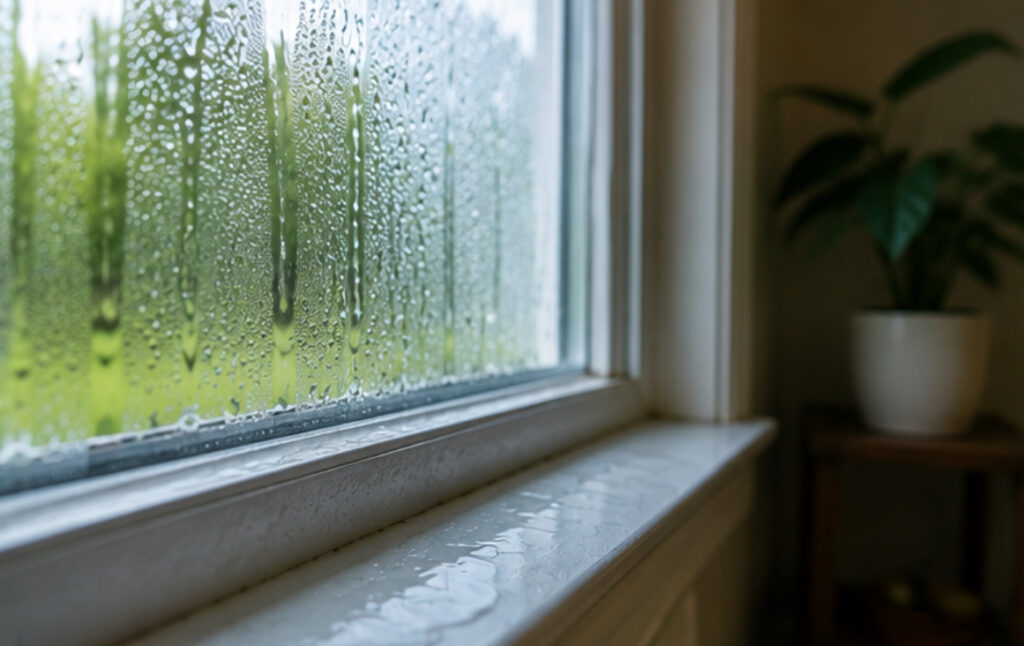
- Condensation on Windows: Moisture collects on windows or glass doors, especially during the morning.
- Musty Odors: Persistent damp or musty smells may indicate excess moisture inside the home.
- Higher Cooling Bills: Humid air feels warmer, causing homeowners to lower the thermostat and increase AC runtime.
- Mold or Mildew Growth: Bathrooms, closets, and other low-airflow areas may begin showing signs of mold if humidity remains too high.
These symptoms don’t always mean you need a new air conditioner. In many cases, correcting airflow issues, improving drainage, or scheduling professional AC maintenance can significantly improve your home’s humidity levels.
How Can You Reduce Indoor Humidity?

If your home feels humid even though the AC is running, there are several steps you can take before assuming the equipment needs to be replaced. Improving airflow and reducing the amount of moisture entering your home can make a noticeable difference. These changes also help your air conditioner operate more efficiently during Southlake’s long cooling season.
Replace Your Air Filter Regularly
A clogged air filter restricts airflow across the evaporator coil, making it harder for the system to remove moisture. Check your filter every month and replace it every 1 to 3 months, depending on the filter type, pets, and indoor air quality.
Keep Air Vents Open
Closing multiple supply vents or blocking return vents can reduce airflow throughout the system. Proper air circulation allows your AC to remove both heat and humidity more effectively while helping maintain even temperatures from room to room.
Seal Air Leaks Around Your Home
Warm, humid outdoor air can enter through gaps around doors, windows, attic access points, and plumbing penetrations. Sealing these openings helps reduce the amount of moisture your air conditioner has to remove every day.
Schedule Professional AC Maintenance
Routine maintenance keeps important components like the evaporator coil, condensate drain, and blower operating efficiently. A seasonal tune-up also allows technicians to identify developing airflow or drainage problems before they begin affecting indoor comfort.
Install a Whole-Home Dehumidifier
If your air conditioner is cooling properly but your home still feels damp, a whole-home dehumidifier can provide year-round humidity control. Unlike portable units that treat one room at a time, a whole-home system works with your HVAC equipment to maintain balanced humidity throughout the house. This helps improve comfort, reduces strain on your air conditioner, and supports healthier indoor air quality during Southlake’s humid summer months.
Small maintenance improvements often solve minor humidity problems. However, if your home still feels damp after addressing these areas, it’s time to have the HVAC system professionally evaluated.
How Do HVAC Technicians Find the Cause of High Indoor Humidity?
Finding the source of excess indoor humidity requires more than checking the thermostat or measuring the temperature coming from the vents. High humidity can result from restricted airflow, poor moisture removal, leaking ductwork, or problems within the cooling system itself. A professional HVAC inspection evaluates how the entire system is operating so technicians can identify the underlying cause and recommend the most effective solution for restoring comfort.
| Professional Inspection | Why It’s Important |
|---|---|
| Airflow testing | Confirms the system is moving the proper amount of air across the evaporator coil. |
| Evaporator coil inspection | Checks for dirt buildup that reduces moisture removal. |
| Condensate drain evaluation | Ensures condensation is draining properly from the system. |
| Refrigerant performance check | Verifies the AC is operating within manufacturer specifications. |
| Ductwork inspection | Identifies leaks that may be pulling humid attic air into the system. |
During service calls in Southlake, technicians often find more than one issue contributing to high indoor humidity. For example, a dirty evaporator coil combined with leaking return ducts can significantly reduce moisture removal. If the HVAC system is operating correctly but humidity remains consistently high, a professional whole-home dehumidifier installation may be recommended to provide better long-term humidity control.
Why Choose Ideal Air for Indoor Humidity Solutions in Southlake, TX?

If your home feels cool but still uncomfortable, excess humidity may be the real problem. At Ideal Air, we take a comprehensive approach to diagnosing indoor comfort issues by evaluating airflow, equipment performance, ductwork, and moisture removal instead of simply adjusting the thermostat. Our goal is to identify the root cause and recommend the solution that’s best for your home.
Whether your home needs professional AC maintenance, targeted AC repair, ductwork improvements, or a whole-home dehumidifier installation, our experienced team will recommend the solution that best fits your home’s comfort needs. We focus on resolving the root cause of indoor humidity rather than providing temporary fixes.
If you’re tired of dealing with sticky indoor air, rising cooling bills, or a home that never feels comfortable, let Ideal Air help. We’ll evaluate your HVAC system, identify what’s causing the excess humidity, and recommend solutions that keep your Southlake home cool, comfortable, and healthy throughout the North Texas summer.