Skip to content
Struggling with a Musty HVAC Smell in Your Southlake Home?

If your house has that stubborn musty smell every time the AC or heat kicks on, and you cannot seem to figure out where it is coming from, you are not alone. Many Southlake homeowners deal with Dirty Sock Syndrome, especially during spring and fall.
At Ideal in Air, our expert HVAC professionals specialize in finding the real cause and fixing it the right way. We eliminate the odor at the source using Decon7 treatment, coil cleaning when needed, and whole home iWave protection to help keep it from coming back. If you are tired of masking the smell, we are ready to solve it properly.
What Is That Stale, Musty Smell Coming From Your HVAC?

Dirty Sock Syndrome is a musty HVAC odor that smells similar to a gym locker room. It typically occurs when your HVAC system first turns on, especially after sitting idle between cycles.
Common Signs of a Musty HVAC Smell in Southlake Homes
- Musty smell when air conditioner or heating system starts
- Odor fades after 10 to 20 minutes
- Smell returns during the next startup
- Worse during mild weather and short cycling
- Often associated with heat pump systems
Because Southlake has humidity fluctuations throughout the year, HVAC odor issues like Dirty Sock Syndrome are more common than many homeowners realize.
Why Your AC Smells Musty When It Turns On
In most cases, the evaporator coil is where the problem begins.
Your evaporator coil is designed to remove heat and humidity from the air inside your home. As it does this, condensation naturally forms on the coil’s surface. That moisture is normal and expected. But, over time, tiny airborne particles such as dust, pollen, and other organic debris settle onto the damp coil.
When moisture and debris combine, they can form a thin layer of buildup. As air passes over that surface at system startup, the airflow can carry a musty odor into your home. This is why the smell is often strongest when the HVAC system first turns on and then fades as it continues running.
What Makes That HVAC Odor More Likely in Tarrant County?

Certain conditions in Southlake homes can make Dirty Sock Syndrome more likely to develop, especially during humid or mild seasons. Here are the most common contributors we see:
- High indoor humidity levels
- Heat pump operation during seasonal transitions
- Systems switching between heating and cooling in the same day
- Poor or restricted airflow
- Dirty blower wheels
- Clogged condensate drain lines
- Improper condensate pan drainage or slope
Before recommending any treatment, our HVAC technicians check each of these areas carefully. That way, we correct what is actually causing the odor instead of just treating the symptom.
Not Every HVAC Odor Is a Musty Coil Smell
Not every musty odor in your HVAC system is Dirty Sock Syndrome. It’s important to get to the bottom of the issue, because sometimes the cause could be something else entirely. You might be dealing with standing water in the drain pan, a clogged condensate drain line, or even a dry plumbing trap. Duct contamination, electrical overheating, or burning dust at startup can also contribute to unpleasant smells. At Ideal Air, we take the time to pinpoint the exact source of the odor. Instead of just covering it up with a quick fix, we focus on solving the real problem, ensuring your system is running efficiently and odor-free.
Ideal Air’s 3 Step Musty HVAC Odor Solution (What Works Best)

After years of helping homeowners in Southlake and throughout Tarrant County eliminate Dirty Sock Syndrome, our HVAC technicians have developed a structured process that delivers consistent and lasting results. Rather than relying on a single quick fix, we combine source removal with long term system protection.
Step 1: Chemically clean and treat the HVAC system with Decon7
We start by treating the HVAC system with Decon7 to target the odor source and remove the smell quickly. Decon7 products are EPA registered and used according to label directions. This treatment helps neutralize odor-causing contamination, break down microbial buildup, and provide noticeable improvement, often during the same visit.
Step 2: Evaporator coil deep clean and targeted treatment
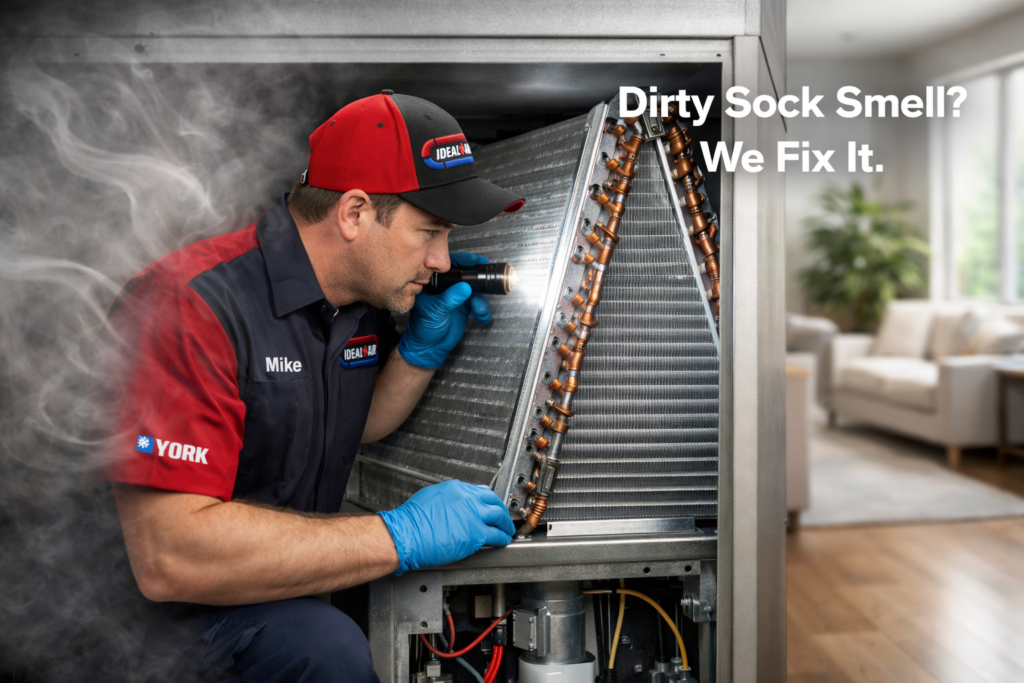
The evaporator coil is often the main source of DSS odors. If the coil is dirty, we remove and properly clean it to eliminate buildup. If it is not visibly dirty, we chemically treat it in place with Decon7. During this step, our technicians also evaluate airflow, blower condition, and drainage to address contributing issues.
Step 3: Install an iWave air ionizer for whole home protection
Steps one and two address the odor immediately in most cases. Step three helps maintain protection between service visits. We install an iWave air ionizer inside the HVAC system to provide continuous indoor air quality support. Certain models use needlepoint ionization technology and are UL 2998 certified for zero ozone emission.
Why Our 3 step method works
Steps one and two remove and treat the odor source so you stop smelling it now. Step three provides ongoing system level treatment that helps reduce the chance of the musty smell returning. This combined approach is more reliable than single solution attempts, especially in humid Texas conditions.
Easy Fixes To Stop That Musty Smell From Returning

Change Filters on Schedule
Regularly replace filters with the correct type for your system. Filters that are too restrictive can reduce airflow, lead to excess moisture, and create conditions for odor-causing contamination on the evaporator coil.
Annual Maintenance
Schedule yearly professional HVAC maintenance. A complete check-up should include inspecting the evaporator coil, evaluating the blower, and checking drainage to keep the system clean, dry, and running smoothly.
Confirm Condensate Drainage Is Correct
Ensure the drain pan, condensate line, and trap are properly installed and flowing. Standing water or improper slope can raise moisture levels and contribute to odors inside the system.
Protect Airflow
Maintain proper, balanced airflow. Dirty blower wheels and restrictive filters can trap moisture on the coil, leading to microbial buildup and musty smells.
Manage Humidity
Control indoor humidity, especially in mild seasons. High humidity creates the perfect environment for microbial growth on damp HVAC components, increasing the risk of Dirty Sock Syndrome returning.
Add Whole Home IAQ Protection
Installing a whole-home indoor air quality solution like an iWave system provides continuous treatment between cleanings and helps reduce buildup in the HVAC system.
Musty HVAC Smell FAQ

Is a Musty HVAC Odor Dangerous?
Dirty Sock Syndrome is not typically life threatening, but it can circulate bacteria and mold spores through your HVAC system. In sensitive individuals, this may trigger asthma, allergies, headaches, fatigue, or respiratory irritation, especially during repeated exposure at system startup.
Can a Musty Coil Smell Be Cleaned?
Yes, in most cases, Dirty Sock Syndrome can be eliminated with proper evaporator coil cleaning and targeted contamination treatment. Simply masking the odor does not solve the problem. Removing and treating the source of buildup is the most effective long-term solution.
What Are the Symptoms of a Musty AC Smell?
The most common symptom is a musty or “dirty socks” smell that appears when your HVAC system first turns on. It is often strongest during spring and fall and is frequently associated with heat pump operation.
How Do You Diagnose a Musty HVAC Odor?
We diagnose Dirty Sock Syndrome by confirming the odor pattern and inspecting the evaporator coil, drain pan, condensate line, airflow, and blower condition. We also rule out electrical, plumbing, or duct related issues before recommending treatment.
Will Duct Cleaning Fix a Musty AC Smell?
Duct cleaning may help if contamination is present in the ductwork. However, Dirty Sock Syndrome most commonly originates at the evaporator coil and drain area. We focus on identifying and treating the primary source first.
Will the Odor Come Back?
The odor can return if humidity levels remain high or if the evaporator coil becomes contaminated again. That is why we combine source removal with ongoing system protection to reduce the likelihood of recurrence.
Is a Musty HVAC Smell a Mold Problem?
Dirty Sock Syndrome can involve microbial growth such as mold, mildew, or bacteria on damp HVAC surfaces. Proper inspection is important because not every musty smell is mold related, and accurate diagnosis determines the correct treatment approach.
Does iWave Produce Ozone?
Certain iWave models are UL 2998 certified for zero ozone emission. We install approved models and provide documentation so homeowners can feel confident in the indoor air quality solution added to their HVAC system.
What If the Smell Is Gas or Electrical?
If the odor smells like natural gas or electrical burning, turn the system off immediately and call for service. These smells are not related to Dirty Sock Syndrome and require urgent professional attention.