Skip to content
In Southlake, you usually start questioning your cooling system when it’s been running for hours and your home still doesn’t feel comfortable, especially in upstairs rooms. You may notice uneven temperatures, longer run times, or rising energy bills without real improvement in comfort. This is often when homeowners begin to wonder if their current system is the right fit or if a heat pump could perform better. Understanding how a heat pump handles Southlake’s summer conditions can help you make a more informed and confident decision before the heat peaks.
How Southlake’s Summer Heat Affects Cooling System Performance

Southlake summers create one of the most demanding environments for any cooling system. When temperatures stay above 100°F and humidity remains high, your system has to run longer just to maintain indoor comfort. In many homes with open layouts and high ceilings, cooling becomes even more challenging. If your ductwork runs through the attic, heat gain reduces efficiency before cool air even reaches your rooms. These conditions directly impact how well your system performs day to day.
How local conditions affect your cooling system:
- Extreme Heat Load: Your system operates continuously during triple-digit temperatures, increasing wear on compressors and internal components.
- Attic Heat Exposure: Ductwork in superheated attics loses cooled air, reducing overall system efficiency significantly.
- Large Home Layouts: Open floor plans and multi-story homes make consistent cooling more difficult across different zones.
- Humidity Pressure: High moisture levels force your system to work longer cycles to maintain indoor comfort.
- Energy Demand Increase: Extended run times lead to higher electricity usage during peak summer months.
- Airflow Challenges: Heat buildup and duct design reduce airflow, especially in upper-level rooms.
These conditions explain why cooling systems in Southlake face more strain than in milder climates. Regular heat pump maintenance helps improve performance and reduces the risk of breakdowns during peak summer demand.
How Heat Pumps Work to Cool Homes in Summer
If you’re used to traditional AC systems, heat pumps may seem like a different approach, but the result feels very similar in your home. Instead of generating cold air, a heat pump removes heat from inside your home and transfers it outside. In Southlake homes, where systems run for long hours, this process can be more energy-efficient when conditions are right. You may notice more consistent temperatures compared to older systems. However, performance depends on how well the system is installed and sized.
How heat pumps cool your home effectively:
- Heat Removal Process: Heat pumps transfer indoor heat outside, rather than creating cold air through energy-intensive methods.
- Continuous Operation Efficiency: Systems run steadily instead of cycling aggressively, improving comfort consistency throughout your home.
- Dual Function System: One system provides both cooling in summer and heating during cooler months.
- Energy Optimization: Modern units adjust output based on demand, reducing unnecessary energy consumption during operation.
- Balanced Cooling Output: Even temperature distribution improves comfort in large, open-concept homes common in Southlake.
- Quiet Operation: Heat pumps typically operate with less noise compared to older cooling systems.
Understanding how heat pumps work helps you evaluate whether they match your home’s needs. Many homeowners explore heat pump installation & replacement to improve efficiency and long-term performance.
Can a Heat Pump Effectively Cool Your Southlake Home During Summer

One of the most common questions you may have is whether a heat pump can maintain consistent cooling during Southlake’s long and demanding summer season. In real situations, performance depends less on the system type and more on how well it’s sized and installed for your home. Larger homes with open layouts or attic ductwork often place higher demands on any cooling system. You may notice longer run times or slight drops in performance during peak afternoon hours if the system isn’t properly configured. The key is making sure the system is designed around your home’s specific conditions rather than relying on a one-size-fits-all approach.
| Condition | What You Experience | What It Means for Performance |
|---|---|---|
| Extreme outdoor heat | System runs longer during afternoon peak hours | Efficiency may drop slightly under continuous high demand |
| Large home size | Uneven cooling between floors or rooms | System sizing becomes critical for consistent performance |
| Attic duct exposure | Reduced airflow reaching living spaces | Heat gain lowers overall cooling efficiency |
| High humidity levels | Indoor air feels sticky even when cooling | System works harder to remove moisture effectively |
| Incorrect system sizing | Struggles to maintain temperature consistently | Performance issues regardless of system type |
Heat pumps can handle Southlake heat when properly installed and sized. Comparing options helps you decide whether this system is the right fit for your home’s cooling needs.
Heat Pump vs Traditional AC System Performance in Hot Climates
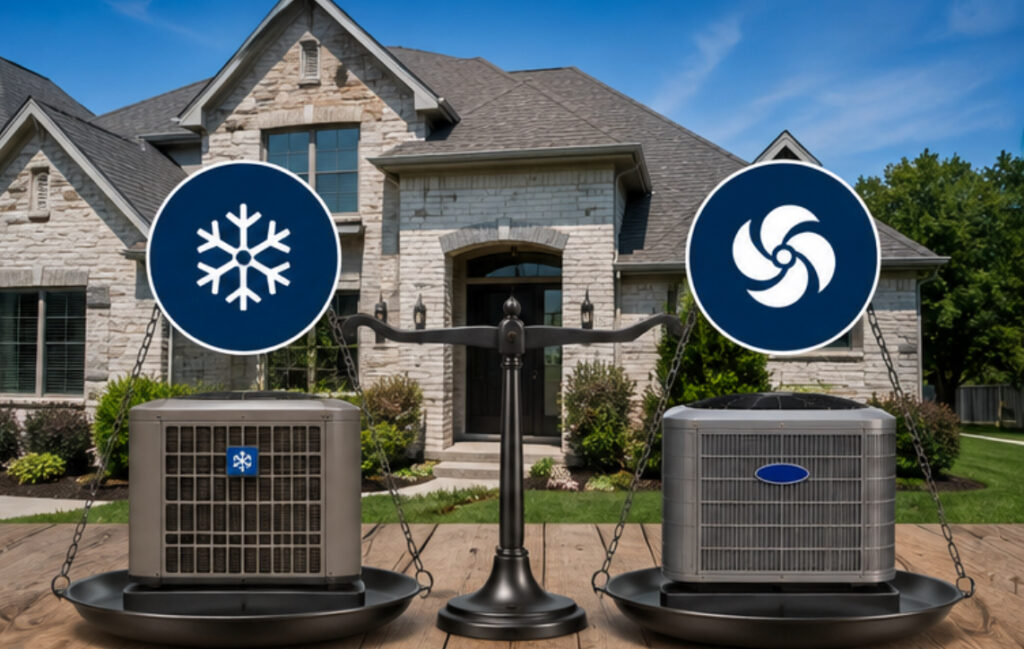
Choosing between a heat pump and a traditional AC system often comes down to how your home handles extreme heat and daily usage. In Southlake, where summers are long and intense, performance differences become more noticeable. You may find that one system provides better results depending on your home’s layout and insulation. Understanding how each system performs helps you make a more informed decision. It’s not just about cooling—it’s about consistency and efficiency.
| Performance Factor | Heat Pump | Traditional AC |
|---|---|---|
| Peak Heat Handling | May lose slight efficiency during extended extreme heat conditions | Designed to handle prolonged high temperatures more consistently |
| Energy Efficiency | Performs efficiently in moderate conditions and steady operation cycles | Uses more energy during long cooling periods |
| Humidity Control | Manages moisture well but may require support in extreme humidity | Strong humidity removal during peak summer conditions |
| Year-Round Use | Provides both heating and cooling from one system | Cooling only, requires separate heating system |
| Operating Style | Runs longer, steadier cycles for consistent comfort | Cycles on and off more frequently during operation |
Choosing between these systems depends on how your home performs under heat stress. The right decision comes from matching system capabilities with your home’s specific cooling demands, which is why many homeowners explore professional heat pump installation to ensure the system is properly sized and configured for their space.
When a Heat Pump Is a Good Choice for Southlake Homes

A heat pump can be a strong option if your home is already relatively efficient and doesn’t lose cool air quickly. In Southlake, this usually applies to newer homes or properties with upgraded insulation and sealed ductwork. If your current system struggles mainly with energy costs rather than cooling capacity, a heat pump can improve efficiency. You may also notice better results if your home maintains consistent temperatures across rooms. The key is matching the system to how your home actually performs during peak heat.
When a heat pump makes sense for your home:
- Well-Insulated Homes: Homes with proper insulation retain cool air longer, allowing heat pumps to operate more efficiently.
- Balanced Layout Design: Even airflow distribution supports consistent cooling performance across multiple rooms and levels.
- Energy Cost Concerns: If your bills keep rising, a heat pump can help reduce long-term energy usage.
- Moderate Cooling Demand: Homes that don’t experience extreme temperature imbalances perform better with heat pump systems.
- Upgraded Ductwork: Efficient duct systems prevent cooling loss, improving overall system performance during long run times.
- Year-Round Efficiency Goals: You benefit from a system that provides both heating and cooling in one unit.
Choosing the right system depends on how your home handles airflow, insulation, and heat exposure. Evaluating these factors helps you determine whether a heat pump is the right investment.
Factors That Affect Heat Pump Cooling Efficiency in Your Home
Even the best heat pump won’t perform well if your home setup works against it. In Southlake, cooling efficiency depends heavily on how your home handles heat throughout the day. Large homes with open layouts often experience uneven cooling, especially during late afternoon heat. If your attic traps heat or your ducts are exposed, your system has to work harder to compensate. Understanding these factors helps you make smarter decisions before installation.
What impacts your system’s cooling efficiency:
- Home Size and Layout: Larger homes require properly sized systems to maintain consistent cooling across all areas.
- Insulation Quality: Poor insulation allows heat to enter, forcing your system to work harder to maintain comfort.
- Attic Heat Exposure: Ducts in hot attics lose cooling efficiency before air reaches your living spaces.
- Air Sealing Gaps: Leaks around windows or doors reduce overall system performance and increase energy usage.
- System Sizing Accuracy: Incorrect sizing leads to inefficiency, uneven cooling, and unnecessary system strain.
- Daily Usage Patterns: Continuous usage during peak hours increases wear and affects long-term performance.
When these factors are addressed, your system performs more efficiently and delivers consistent cooling. Many homeowners combine upgrades with heat pump installation & replacement to improve overall performance.
Benefits of Using a Heat Pump for Summer Cooling in Texas
Heat pumps offer several advantages, especially if you’re looking for a more efficient way to manage long cooling seasons. In Southlake, where systems run for extended periods, energy efficiency becomes a major concern. You may notice that traditional systems cycle more aggressively, while heat pumps operate more steadily. This can lead to more consistent indoor temperatures. Over time, these benefits can improve both comfort and operating costs.
Why heat pumps can benefit your home:
- Lower Energy Consumption: Heat pumps use less electricity compared to older systems during extended cooling periods.
- Steady Temperature Control: Continuous operation provides more consistent cooling throughout your home without frequent cycling.
- Humidity Management: Heat pumps help reduce indoor moisture, improving comfort during humid Southlake summers.
- Dual System Functionality: One system handles both cooling and heating, simplifying your home’s HVAC setup.
- Reduced System Wear: Smoother operation reduces stress on components, extending overall system lifespan.
- Improved Indoor Comfort: Balanced cooling helps eliminate hot and cold spots across different areas of your home.
These benefits only deliver real results when your system is selected and installed correctly. Choosing the right HVAC contractor ensures your heat pump is properly sized, matched to your home’s layout, and installed for peak performance. With expert guidance, you avoid efficiency issues and get reliable cooling even during Southlake’s toughest summer conditions.
Why Choose Ideal In Air for Heat Pump Installation in Southlake TX
Choosing the right HVAC contractor plays a major role in how well your system performs over time. In Southlake, where attic ductwork and long cooling cycles affect efficiency, proper installation is critical. You need a team that understands how local conditions impact system performance so your system is installed correctly and optimized for your home.
At Ideal In Air, your system is installed with a focus on accurate sizing, airflow evaluation, and long-term performance. With over 70 years of combined HVAC experience and recognition as a York Certified contractor, you’re working with a team that understands both equipment and real-world conditions. Whether you’re upgrading or planning ahead, professional heat pump installation helps ensure reliable comfort and efficient performance throughout Southlake’s demanding summer season.